Explore how organizations across healthcare, financial services, and facilities management partnered with Project Brilliant to build stronger leaders, reshape culture, and deliver outcomes that last.
Click any story to explore the full transformation — from challenge to approach to measurable outcomes.
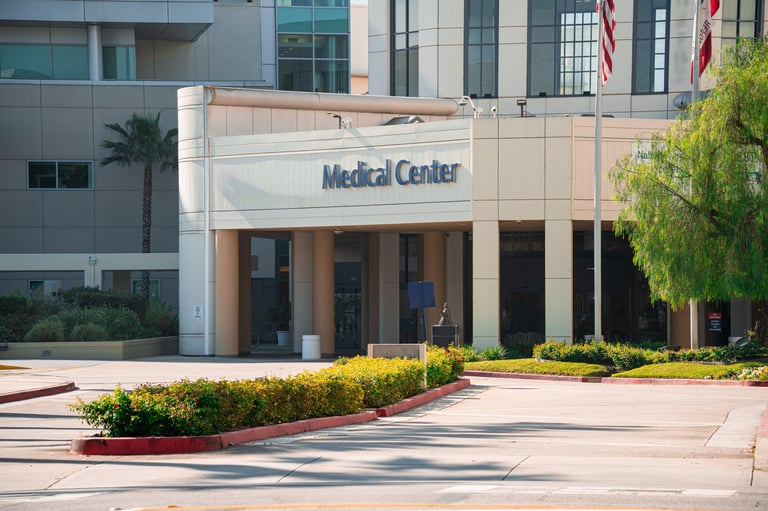
How a 3,000-person healthcare organization reduced turnover and strengthened culture by investing in 350 leaders.
A large healthcare facilities organization based in Indianapolis with nearly 3,000 employees across multiple states. These weren't clinical teams — they were the people who kept hospitals running: electricians, plumbers, painters, project managers, business analysts, directors, and senior executives. From the CEO and his 17 direct reports to 200+ managers and directors and more than 100 frontline supervisors, over 350 leaders shaped the day-to-day employee experience.
Turnover had become a serious issue. In some areas, it had climbed beyond 50%. While exit interviews offered a range of reasons, one truth stood out: people don't leave companies — they leave leaders. The executive team recognized that the financial cost of turnover was high, but the cultural cost was even higher. Institutional knowledge was walking out the door. Morale was inconsistent. Accountability varied by department. Coaching skills were underdeveloped. Difficult conversations were often avoided. If nothing changed, they risked continued instability — and the downstream impact on the healthcare systems they supported.
Project Brilliant designed a comprehensive, multi-level Leadership Development program built around three distinct tracks:
Two-day in-person immersive experience, followed by dedicated full-day workshops on culture and change management.
Seven in-person cohorts across Indianapolis, Austin, Nashville, Pensacola, Milwaukee, and Detroit. Two-day workshop plus six biweekly virtual sessions over three months with accountability groups of 4–6 peers.
Four condensed one-day virtual workshops, followed by biweekly 60-minute cohort sessions with the same accountability structure.
Across 15 months, Project Brilliant facilitated 11 cohorts across multiple facilities and states. The approach was intentionally different — no PowerPoint slides, no passive listening. Instead: interactive exercises, vibrant graphic flip charts, drawing in workbooks, rotating table groups, peer dialogue, and hands-on leadership simulations.
"The accountability groups were the most valuable part of the program. Leaders practiced difficult conversations, tested new coaching approaches, and shared real challenges. They weren't just learning concepts — they were applying them in real time."
— Program Participant
"I have seen great improvement in the autonomy of my team."
"Using coaching conversations has increased my team's internal critical thinking skills and empowers their inner ability to inference and solve problems."
"This agile leadership class has taught me so much. Great info for leaders at any stage."
Leaders reported stronger delegation, more ownership, better conversations, and increased autonomy. The organization is now exploring a Part 2 of the program — because leadership isn't a one-time event. It's a capability that compounds.

Breaking down silos, making work visible, and reconnecting IT with clinicians to transform healthcare delivery.
A 3-year transformation that broke silos, rebuilt trust, and reconnected IT with the people they serve.
At first glance, the challenges were structural. Teams were highly siloed, especially given their reliance on a SaaS-based system. Individual developers often specialized in narrow areas — sometimes to the point where only one person knew how to configure or modify a critical component. These single points of failure weren't just a risk — they were a constraint on progress.
But beneath the structural issues was something deeper: a culture shaped by control. Managers acted as intermediaries between clinicians and developers, gathering requirements and translating them into work. While well-intentioned, this approach introduced delays, diluted context, and created dependency. Developers were removed from the "why" behind the work, and clinicians rarely had direct visibility into how their requests were being implemented.
As part of the transformation, teams were introduced to Scrum or Kanban based on the nature of their work. Cross-functional teams were formed deliberately, breaking apart long-standing silos. This was not always a smooth transition. Individuals who had become heroes in their specialized area worried their stakeholders wouldn't get the same level of attention. Managers now had direct reports spread across multiple teams, challenging traditional lines of authority. Behaviors that had previously been obscured — missed commitments, communication gaps, uneven workloads — became visible almost immediately. Tension surfaced. But that visibility was also the turning point.
"I used to think my job was to know everything that was happening. I had to learn that my job was to make sure the team could handle it."
— Manager, longtime veteran of command-and-control culture
One of the most impactful changes was the introduction of clinician partners working closely with IT teams. These individuals acted as a bridge — not as gatekeepers, but as collaborators who could bring clinical context directly into team discussions. For the first time, developers were hearing firsthand why a change mattered. And clinicians were gaining insight into how work was prioritized and delivered.
This reduced the back-and-forth that had previously slowed progress and built trust in both directions. Instead of long queues of disconnected requests, teams began focusing on what mattered most — and that alone changed the rhythm of delivery.
During a team launch, one participant shared: "I would like to go on vacation and not have to take my laptop for fear of getting a call and having to do some work. I want to vacation while on vacation." Addressing single points of failure became a priority. Team members were cross-trained. Certifications were expanded. Knowledge was shared more openly. Over time, the organization moved from fragility to flexibility.
One team was responsible for replacing an entire system with an external vendor — meaning timelines weren't entirely within their control. Instead of frantic activity, they organized around must-haves vs. nice-to-haves. When leadership saw the volume of incoming legacy requests, they made a decisive call: not yet. For the team, this decision was transformative. They had clarity, protection, and permission to focus.
Over three years, the transformation took hold. Collaboration between IT and clinician staff improved significantly. Teams became more focused, more resilient, and more connected to the outcomes they were delivering. That is what sustained change actually looks like.

How a mid-sized financial institution doubled productivity, reduced cycle times by over 50%, and rebuilt business confidence.
The bank's 90-person technology organization supported both internal operations and customer-facing services critical to the business. More than 25 business stakeholders depended on the team to deliver modernization initiatives tied directly to bank priorities. They were disciplined and capable, but structured around traditional, project-based delivery. As complexity increased, that structure created friction instead of flow.
Trust between business and IT weakened
Stakeholders disengaged
Teams felt overloaded and reactive
Customer-facing improvements slowed
"We eventually stopped bringing forward new requests because we had lost confidence that they would move forward."
— Business Leader
The issue was not talent. It was the system governing how work flowed.
Project Brilliant began with executive alignment. Senior leaders committed to two system-level optimizing goals: Predictability and Customer Satisfaction. Every structural and behavioral decision was filtered through two questions: Does this improve Predictability? Does this increase Customer Satisfaction?
Rather than organizing around temporary initiatives, the technology organization restructured around four long-lived product value streams:
7 cross-functional Scrum teams aligned to 4 product value streams
9 shared services Kanban teams managing operational and flow-based work
Lightweight scaling patterns inspired by LeSS and Scrum@Scale
A cross-functional Change Leadership Team to sustain progress
Each team began with a structured 1 to 2 week Team Liftoff. They were equipped to operate effectively from day one.
Within four months, teams executed more than 20 releases — a pace unheard of under the previous project model. Cycle times reduced from more than 30 days to 12 days. Say/Do ratios sustained above 90%.
"We had stopped submitting requests because nothing ever seemed to move. Now, we're amazed at how much is being delivered. It has given our business unit renewed excitement about what's possible."
— Business Leader
Productivity doubled across teams
2–3 releases per month accelerated time to market
Customer satisfaction measurably increased
"This Agile transformation has truly exceeded my expectations."
— CIO
First, leadership aligned around clear optimizing goals. Predictability and Customer Satisfaction became consistent decision filters shaping funding, prioritization, structure, and behavior.
Second, the organization redesigned its operating model rather than layering agile practices onto an outdated project structure. Agility became structural rather than ceremonial.
Real feedback from leaders and teams who have experienced the Project Brilliant difference.
 Reviews
Project Brilliant transformed how our teams work together. Their approach to agile transformation is practical, not dogmatic — and the results speak for themselves. We went from fragmented delivery to aligned, predictable outcomes in under six months.
— Verified Google Review
The leadership development program was a game-changer for our organization. We saw immediate improvements in team alignment and delivery speed. Our managers are now coaches, not just taskmasters.
— Verified Google Review
Aaron and the Project Brilliant team bring a rare combination of deep expertise and genuine care. They don't just consult — they embed with your teams and build capability from within. Highly recommended.
— Verified Google Review
 Trustpilot
Exceptional training and coaching. Project Brilliant helped us build a culture of continuous improvement that has lasted well beyond the engagement. The ROI has been undeniable.
— Verified Trustpilot Review
Working with Project Brilliant was the best investment we made. Their coaches are hands-on, knowledgeable, and truly care about outcomes — not just deliverables.
— Verified Trustpilot Review
I've worked with many consulting firms over two decades. Project Brilliant stands apart because they actually deliver what they promise — and they build your internal capability so you're not dependent on them forever.
— Verified Trustpilot Review
Every transformation starts with a conversation. Let's talk about where your organization is today — and where it could go.
Start the Conversation